Palm Sunday

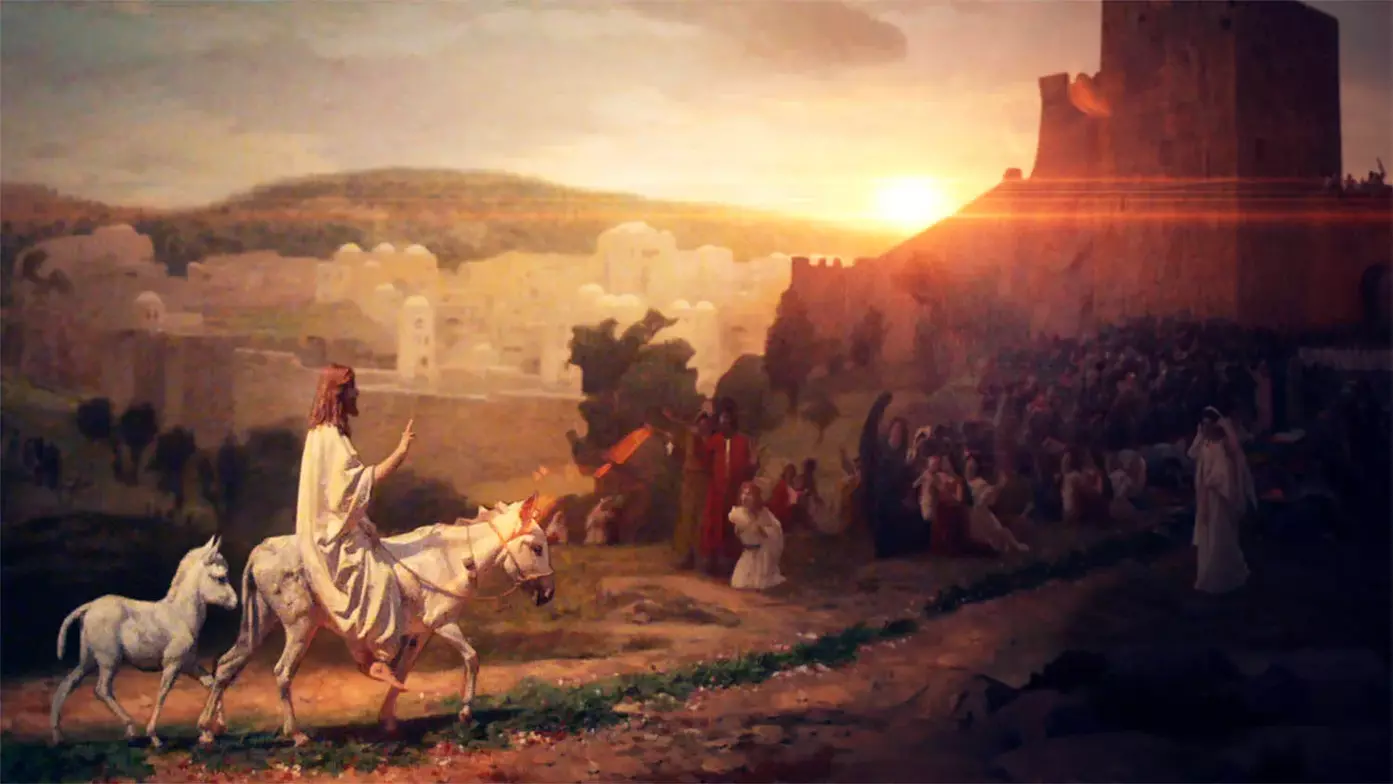
The following are excerpts from Dr. Titus Kennedy's book Excavating the Evidence for Jesus.
The Triumphal The “Triumphal Entry” took place on March 29, 33 AD, which was Nisan 9 in the Hebrew calendar. In fact, the event seems to have been prophesied by Daniel over 600 years earlier, who wrote that the Messiah would appear in 69 “weeks” of years after the decree by Artaxerxes I to rebuild the walls of Jerusalem in Nisan of 444 BC (Daniel 9:25; Nehemiah 2:1-8). Because of the difference between the 360 day standard calendar year and the actual solar year of 365.25 days, the total solar years amounted to 476, ending in Nisan of 33 AD. This was also the basic understanding of many scholars in the early Church, who saw a prophecy of Daniel fulfilled with the coming of Jesus as the Messiah and King (Anthanasius, On the Incarnation of the Word; Origen, Pricipiis; Sextus Julius Africanus, The Chronography).
Join us in December as Dr. Kennedy visits MBC.
And here is a bit more of Dr. Kennedy's article:
The “Triumphal Entry” of Jesus into Jerusalem was a momentous event recorded by all four Gospel writers (Matthew 21:1-16; Mark 11:1-11; Luke 19:28-46; John 12:12-19). The name of the event, derived from the Roman triumph celebration, is not found in the Gospels but was suggested as an appropriate description for a king or ruler entering his capital city during a procession of his subjects or followers.
On the Sunday before the crucifixion, Jesus of Nazareth approached Jerusalem from the east, crossed the Kidron Valley and eventually entered the Temple complex and the city through the Eastern Gate, also known as the Susa Gate.
As Jesus rode towards the city on a donkey, the people spread cloaks and branches on the road in front of Him while shouting hosanna (Hebrew and possible Aramaic for “save us”), quoting a Psalm, and proclaiming that Jesus was the king, descendant of David, and one sent from God (Psalm 118:26). This entrance into Jerusalem riding on a donkey or colt was prophesied in Zechariah, then quoted by Matthew and John and alluded to by Mark and Luke (Zechariah 9:9; Matthew 21:4-5; John 12:14-15; cf. Genesis 49:11 for a possible connection).
The association of anointing a king of Israel in connection with a procession involving the king passing over garments that the people have placed in front, while he is also proclaimed king to the sound of trumpets, goes back to traditions performed in the time of David and Solomon which continued to be repeated during the Kingdom of Judah (1 Kings 1:33-34; 2 Kings 9:11-13).
The language used and actions depicted in the Triumphal Entry of Jesus go back to records of kings and conquerors being welcomed into cities during the Hellenistic and early Roman periods. This developed into a set procession by the time of the Empire. In ancient Roman culture, a triumphant victor, known as vir triumphalis (“man of triumph”) would enter the city in a celebration parade wearing the laurel wreath and a purple garment, which identified him with the royal and the divine, while riding in a chariot pulled by four horses, alluding to Sol the sun god.
By the time of the Roman Empire and the life of Jesus, the requirements and meaning of a triumphal entry had shifted slightly from its earlier roots associating it with a conquering hero, as it became even more significant and representative of kingship and divinity.
In a comparable fashion, Jesus began the Triumphal Entry outside the boundaries of Jerusalem in Bethphage on the Mount of Olives, rode on a donkey like the kings of ancient Israel, descended down the road into the Kidron Valley, entered the city through the Susa Gate, then went to the Temple where He cleansed it of merchants and moneychangers. The similarities to the Roman Imperial triumph and the ancient Israelite kinship procession are obvious. Therefore, the Triumphal Entry of Jesus had significance and implications for both the cultures of Israel and Rome, as Jesus carried out traditions associated with both an ancient king, conquering victor, and the Divine all in one procession.
While this could have been seen as subversive or as a claim to kingship by the Romans, apparently the procession either went unnoticed or largely ignored by the Roman authorities. This may have been due to the understated nature of the procession in which Jesus rode on a donkey, without a crown or purple clothing, and was primarily noticed by His followers and a few opposing religious leaders. In fact, an alleged king riding on a donkey would have been comical for the Romans. The chief priests, scribes, and Pharisees certainly observed the acclamations of the people toward Jesus as the king, since they were astonished and told Jesus to rebuke His followers for these statements.
A longer excerpt of Dr. Titus' article, as well as the Graphic, is found at the Drive Thru History website: The Triumphal Entry - Drive Thru History Adventures